

For years, sustainable travel has encouraged us to minimise harm, use less plastic, reduce emissions, respect cultures and protect the places we visit.
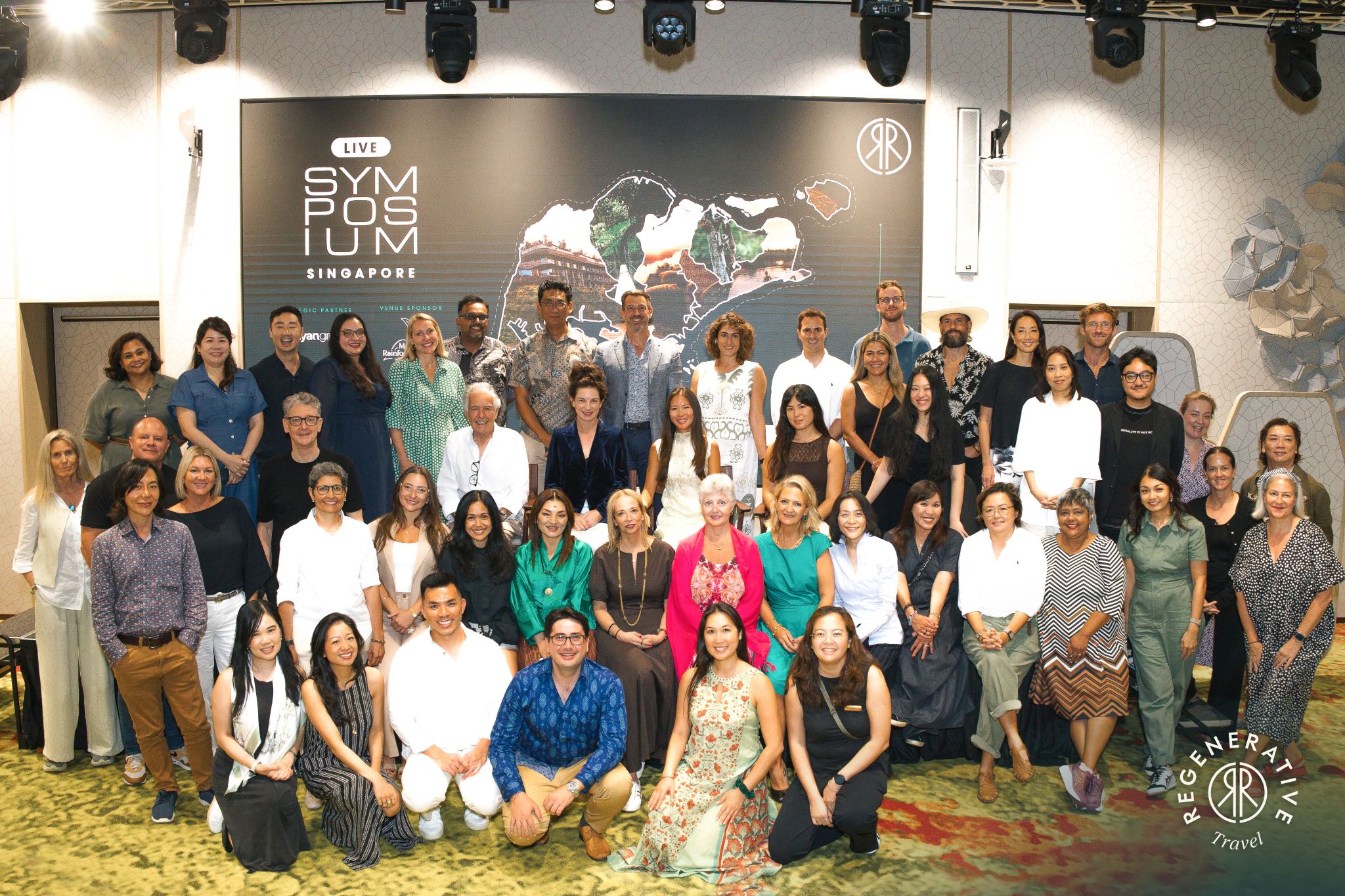
Ethical Traveler attended the Regenerative Travel Asia Symposium in Singapore, where the conversation explored a bigger question: what if the travel and tourism industry could actively restore ecosystems, strengthen local communities, and rebuild our relationship with the natural world?
One message became clear: for decades, tourism has often been built around consumption. Regeneration challenges us to rethink how we relate to the places, communities, and ecosystems we encounter.
Amanda Ho, co-founder and CEO of Regenerative Travel, set the tone by describing regenerative tourism as a shift from head to heart, scarcity to abundance, and individual to collective, challenging participants to see tourism not simply as an industry, but as a relationship between people, places, and nature.
Keynote speaker Juliet Kinsman, reinforced this idea, reminding us that we are not separate from biodiversity but part of an interconnected living system. In an increasingly digital world shaped by technology and AI, she highlighted the importance of “regenerating humanity” by rebuilding connection with the planet and each other.
Travellers are increasingly recognising the need for change. Jeremy Tran from Sustainable Travel Asia shared research from Booking.com showing that 85% of travellers want more sustainable travel options and 69% want to leave places better than they found them.
But wanting to travel better and knowing how to travel better are two different things.
Tran reflected on the influence of social media in shaping modern travel behaviours. In an age where places can become trends overnight, it’s worth asking are we choosing experiences with intention, or simply following where everyone else has already been. Moving beyond trends means considering why we’re travelling in the first place and how we engage once we arrive. Three things travellers might consider:
- Who benefits from our tourism dollars?
- Who shapes the experiences we participate in?
- Are local communities leading tourism development, or simply adapting to decisions already made?
The growing focus on wellness tourism and its relationship with regeneration was another key theme throughout the symposium. While wellness travel has traditionally focused on restoring the individual—often through local traditions, knowledge, and healing practices—regenerative travel asks a broader question: can we simultaneously restore the wellbeing of the communities and ecosystems that make those experiences possible? Because regeneration is not only environmental, it’s relational.
Communities are not just hosts of travel experiences, but centers of culture and wisdom. The importance of creating travel experiences based on exchange rather than extraction was emphasised, but how do we ensure these values are reflected in practice?
For tourism to be genuinely regenerative, communities cannot simply be recipients of tourism benefits, they need to be active participants in shaping decisions that impact their land, culture, and future. Maitri Fischer from Eco-Mantra, leader in environmentally sustainable design, highlighted the tensions that arise when tourism growth is not balanced with local needs, using Bali as an example of the pressures created by rapid over development, from waste management issues to increasing pressure on resources and infrastructure.
Of course, the success of regenerative travel cannot lie with travellers alone. Often hotels, resorts, tour operators, and tourism leaders are the ones shaping how travellers interact with their destinations. Throughout the symposium, industry leaders — including Banyan Group, The Datai Langkawi, and Potato Head Bali — shared examples of regeneration in action. Another noteworthy example is Song Saa Private Island, built on degraded land with a vision to restore rather than simply develop. Through the Song Saa Foundation, the resort helped establish Cambodia’s first Marine Protected Area. Around 75% of its staff are employed from surrounding communities. Existing initiatives such as on-site waste management, food waste reduction, and rainwater harvesting minimise environmental impact. Guests are invited to become part of the regeneration journey by joining conservation activities and community outreach, transforming visitors from passive observers into active contributors.
Regeneration is about more than giving visitors the chance to do good. It begins with how tourism is designed, placing communities, culture, and nature at the centre of decision-making. As interest in regenerative travel grows, there is also a risk that it becomes another form of greenwashing or simply another marketing label. Unless, it is backed by transparency, genuine community participation, and measurable long-term impact. Both the industry and travellers have a role to play in ensuring regeneration is more than a promise, it’s a commitment.
As the climate crisis intensifies and global tourism increases, the need for regeneration has never been more urgent. Nick Hardman, marine biologist and Head of Sustainability at Banyan Group, reminded the audience that “tourism has a huge power to be part of the healing process.”
But how do we make people care? Connection, Hardman explained, is key: “You have to make it personal.” Whether it’s participating in a coral restoration dive or engaging in meaningful cultural exchange with an Indigenous community, people are more likely to protect what they feel connected to.
The conversation also raises important questions about accessibility. If regeneration is truly about collective change, it cannot remain the domain of luxury travel. It must extend across the wider tourism industry, from local operators to everyday travellers. For many travellers, affordability is an important consideration, so regeneration should be accessible across all types of travel, not just luxury experiences.
As travellers, our contribution to regenerative travel begins with the choices we make. By seeking transparency, supporting community-led experiences, choosing businesses that invest locally, and asking who benefits most from our travels, we can help move tourism towards a future based on mutual benefit.
Regenerative travel is not about perfection. It is about intention. It invites us to move from consumption to connection to contribution, seeing travel as an opportunity not just to experience a place, but to support it. At its best, travel does not just change us; it can also strengthen the people and places that welcome us.
Read Ethical Traveler's Reprint Policy.